If you’re building an AI model for OFM/Fanvue, Discord is where the real “day to day” learning happens. It’s faster than courses, more honest than Twitter threads, and you can get answers in minutes instead of spending days guessing.
This post covers three “AI OFM” Discord servers listed on Discadia: AI OFM City, Fortune AI OFM, and AI OFM Academy. I’m personally in AI OFM City, so that section is written in a more firsthand style.
AI OFM City (my firsthand take)
AI OFM City is an 18+ community aimed at people trying to earn with AI OFM or start from scratch.
What I actually like about it is how practical it feels when you’re trying to build an AI creator that can really convert.
1) Model feedback (huge time saver)
You can post your AI model and people will comment on the details that actually matter:
- Does the face look believable?
- Does it stay consistent across angles?
- Does the vibe match the niche?
- Does it look like “real social media” instead of obvious AI?
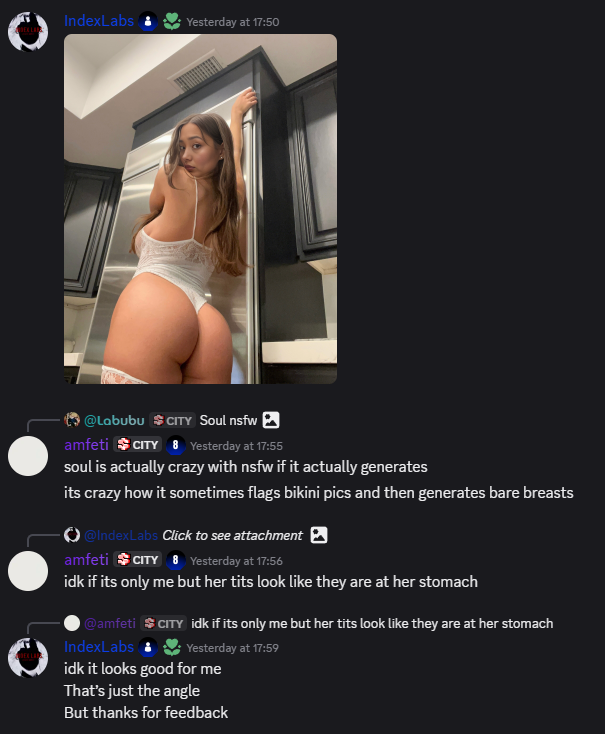
That feedback saves you a ton of time, because it’s easy to waste days generating content for a model that looks slightly “off” and will never perform well.
2) Direct answers when you’re stuck
The second thing is that questions get answered in a direct way.
When you’re stuck on prompts, account warm-up, Reel ideas, link setup, pricing, or DMs, you can ask and usually get a straight response from someone who has tested it.
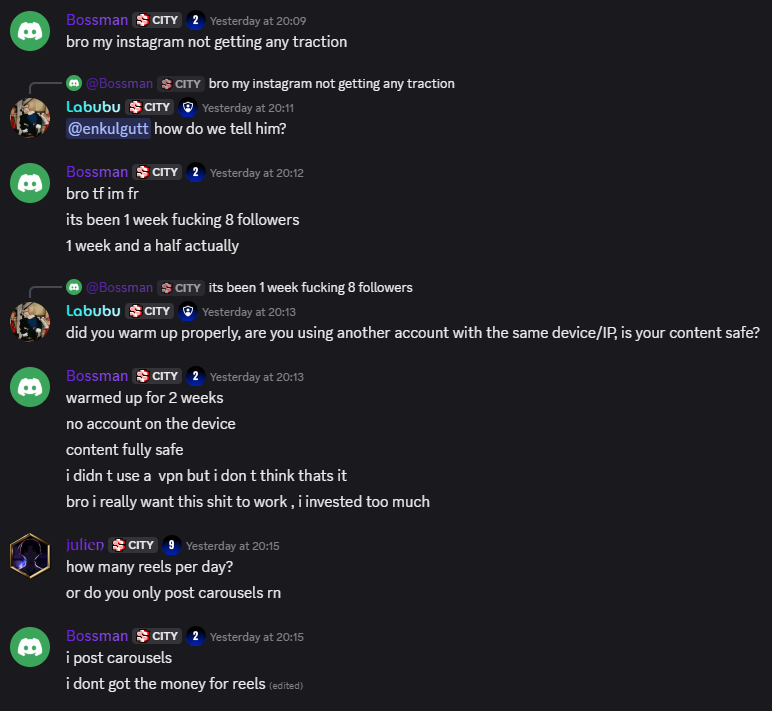
It’s less “stay consistent bro” and more:
- “Try this format”
- “Change this hook”
- “Your bio is risky”
- “This pricing will convert better”
That speed matters when you’re running daily posts and you need fixes now, not next week.
3) Higher earners (useful, even if you’re skeptical)
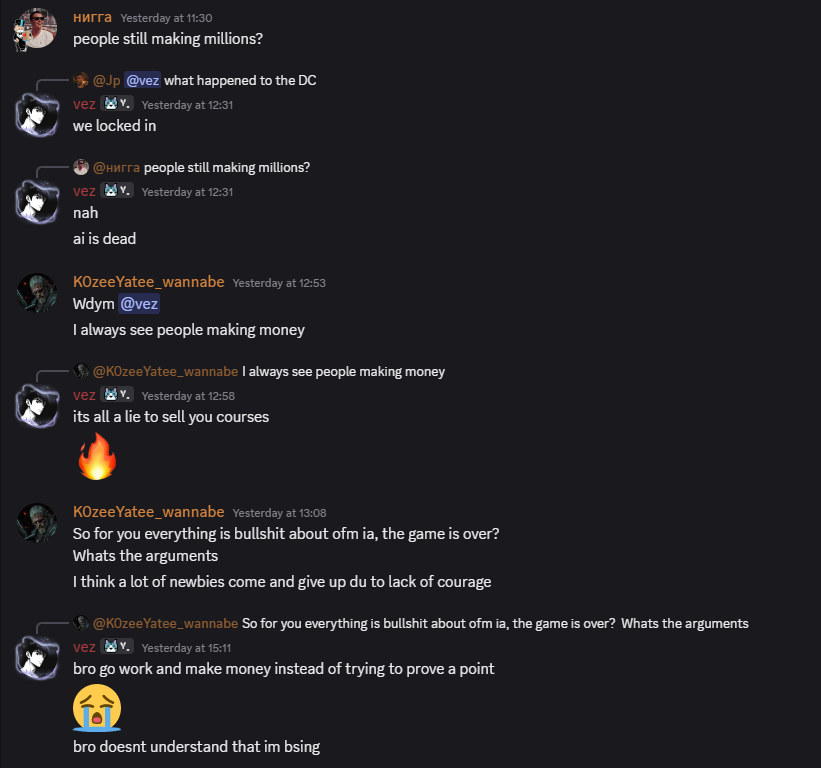
There are also high-earning members in the community. Some people claim 6-figure results, and a few even claim millionaire-level outcomes.
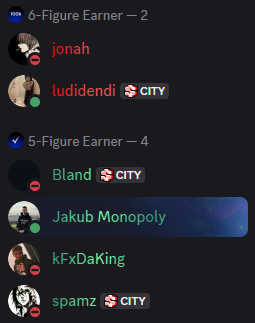
I don’t treat income claims as proof by default (anyone can say anything online), but the bigger value is that the advice often sounds like it comes from real execution:
- Clear do’s and don’ts
- Specific systems (not just generic motivation)
- Warnings about what gets accounts limited or kills conversions
Even when you disagree with someone, it gives you a clearer picture of what’s working for others right now.
4) Work + hiring (underrated leverage)
The work and hiring side is another underrated benefit. If you want to scale, you’ll eventually need help—chatters, editors, caption writers, clip makers, or people who can handle pieces of the workflow. These servers can act like a talent marketplace, but it can also work the other way: if you have a skill (chatting, prompts, content planning, clipping), you can sometimes find paid work and build connections without having a huge personal brand.
My honest warning (Discord can eat your time)
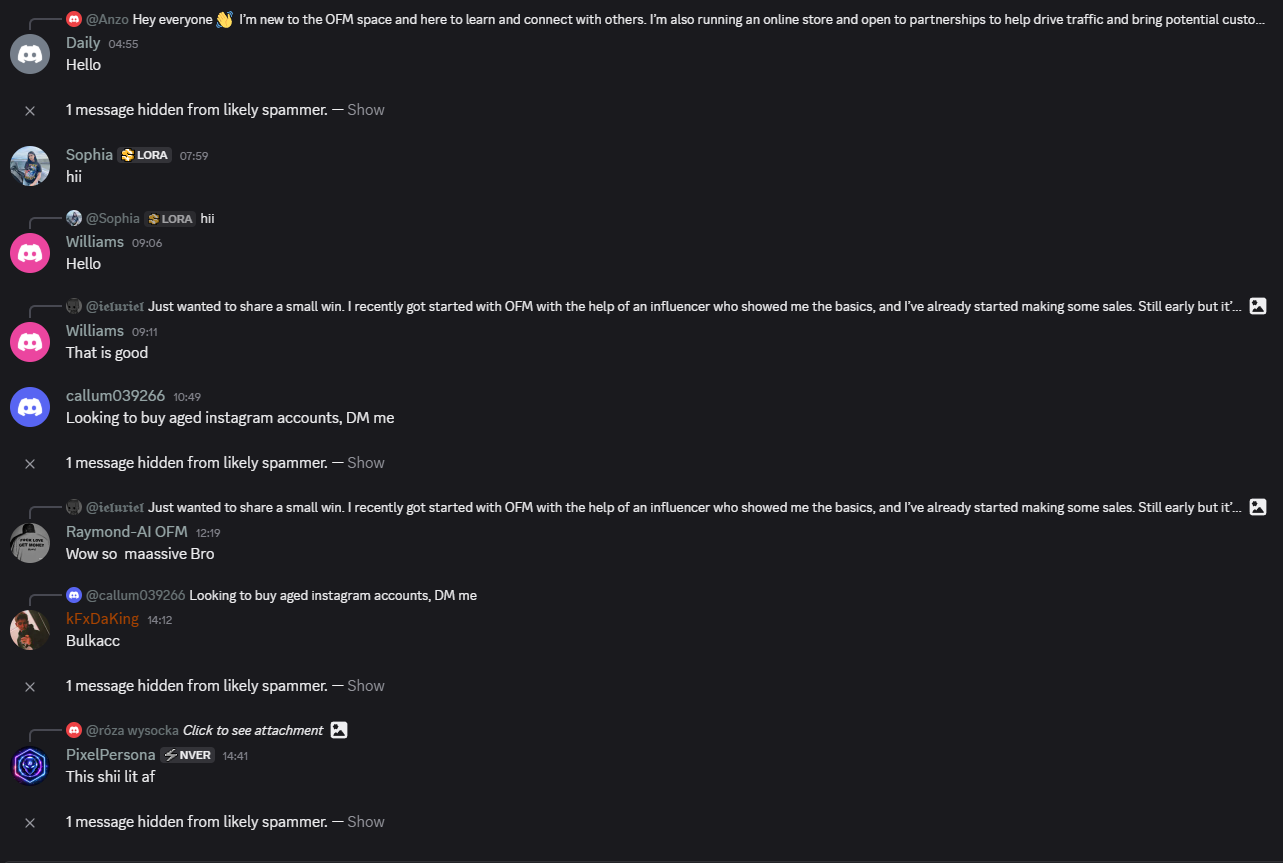
Discord is noisy and can waste your time if you treat it like entertainment. The value comes from using it with a plan:
- Search old messages before asking
- Ask specific questions (with screenshots/examples)
- Test one change at a time so you know what actually moved the needle
Fortune AI OFM (more networking + OFM focus)
Fortune AI OFM is listed as a community for learning, talking, and networking in OFM and specifically AI OFM, with coverage across model creation and social growth.
If you already understand the basics, a server like this becomes useful in a different way: it helps you stay current and make faster decisions.
- You see what people are testing right now: new Reel formats, new hook styles, new “safe funnel” link setups
- You spot which tools are producing the most realistic results this week (not what worked “in theory” last quarter)
- You get real-time examples and quick feedback instead of guessing in isolation
- You build a feel for what’s trending across multiple creators, which matters because this space changes fast—what worked a month ago can suddenly stop working (or get your reach limited)
It’s also valuable for networking, but not in a fake “add me bro” way.
- You can find partners, service providers, and collaborators who already understand the AI OFM workflow
- That includes chatters, editors, clip makers, prompt specialists, landing-page/link-hub builders, and people who can audit your profile or DM flow
- If you’re skilled yourself, these servers can also be where you get hired
- Over time, that network becomes a shortcut: when you hit a problem, you often know exactly who to ask
Finally, it gives you perspective when the platform shifts.
- When reach drops, links get flagged, or an account starts getting limited, it’s hard to tell if the problem is “you” or a wider change
- In a server, you can quickly confirm patterns: “Is anyone else seeing lower Reel reach today?” “Are link hubs being restricted?” “Did boosting approvals get stricter?”
- That context helps you react calmly, adjust your approach, and avoid panicking or making risky changes that make things worse
AI OFM Academy (beginner-friendly learning community)
AI OFM Academy is described as a community for AI influencers / AI models and OFM creators, focused on learning how to create, grow, and monetize AI models on platforms like Fanvue, plus resources like prompt guides and Instagram growth strategies.
You want a server like this if you prefer a structured learning environment over random chat.
Good “academy-style” Discords usually include:
- Clear “start here” channels
- Pinned guides and templates
- Step-by-step checklists
- Common Q&A threads for repeat problems
That structure matters most when you’re new because it gives you an actual path instead of scattered conversations: set up your model, set up your pages, start posting, start tracking results, then improve one thing at a time.
It’s also great for basic troubleshooting with people at the same stage. When you’re learning, you hit the same issues as everyone else:
- Face consistency problems
- Captions that feel robotic
- Posts that don’t get reach
- Confusion about what to post next
- Trouble keeping a persona consistent
In a server like this, you can ask beginner questions without feeling like you’re wasting an advanced person’s time, and you’ll usually get answers that match your reality (simple steps, common mistakes, and “try this first” guidance).
Finally, the vibe is typically more education-first than pure networking. Instead of feeling like a marketplace where everyone is selling something or flexing results, it feels more like a classroom: people share templates, break down examples, and explain what they’re doing in plain language. If your goal is to build skills and confidence before you start partnering, hiring, or scaling, this kind of server tends to be a calmer, more focused place to learn.
How I’d use these servers (simple, practical)
You want Discord to actually move you forward? Treat it like a work tool, not entertainment.
- Post your model for feedback early, before you spend hours generating a huge library
- A small flaw (uncanny face, inconsistent eyes, weird hands, “AI skin,” mismatched vibe for the niche) will drag down everything you make later
- Getting honest opinions at the beginning saves time and keeps you from building 200 posts around a model that won’t convert
When you ask for help, ask one clear question at a time and make it easy to answer.
- Don’t ask “How do I grow?”
- Ask specific questions like: “Which of these 3 faces looks most real for Reels?”, “Does this bio feel safe and believable?”, or “Which hook is stronger for this 8-second Reel?”
- The more focused the question, the better the replies
- If you can, include 2–3 options, a screenshot, and your goal (traffic, conversions, realism, or consistency)
Then don’t follow every opinion—filter for signal.
- Look for repeat patterns in the advice; when multiple people say the same thing in different words, that’s usually a signal
- Turn that into a test: change one variable (hook, posting time, content type, link path, pricing) and track results for a few days
- Use simple metrics: saves, shares, profile visits, link clicks, DM starts, and conversion rate
- That’s how Discord becomes a feedback loop, not a rabbit hole
Finally, be careful with anyone selling “guaranteed” results.
- Communities are best used for ideas, examples, and warnings—not blind trust
- If someone promises exact numbers or tries to rush you into paying, slow down, verify, and compare with other experienced voices
- The creators who win long-term learn, test, and build their own system—not the ones who copy hype