Creating and monetizing an AI adult model is usually not “automatically illegal,” but it sits in a highly regulated area where platform rules, consent, disclosure, and anything involving minors can create serious legal risk.
Are AI OnlyFans models illegal?
In most places, making an AI “virtual creator” is legal by itself. The legal problems usually come from how you make it, who it imitates, what you depict, and whether you follow platform rules and verification.
Think of it like this: AI is the tool, but adult content and payments are heavily regulated. That’s why you must treat this like a real business, not a meme page.
The biggest issue: platform rules (OnlyFans vs. AI)
A major practical risk is that your AI model might be allowed in “real life,” but not allowed on the platform you choose. Many creators report that OnlyFans has strict guardrails around synthetic media, especially deepfakes/impersonation and fully synthetic adult content, and accounts can be rejected or removed if you cross those lines.
Because of that, many AI creators look at platforms that explicitly support AI creators like Fanvue or Ntice. (Even then, you still need to follow rules carefully.)
KYC: AI does not mean anonymous
A very common misconception is: “If the model is AI, I don’t need to verify.” That is not how adult subscription platforms work.
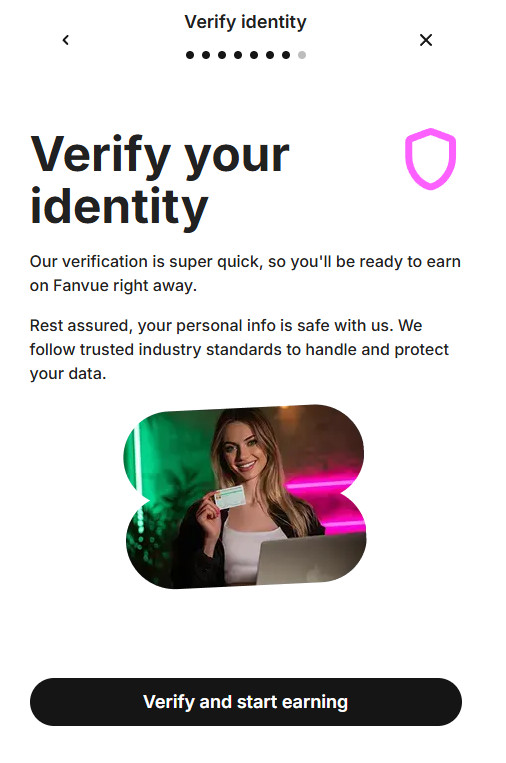
Most credible adult platforms require KYC (identity verification) because they need to prove the account owner is a real adult and comply with financial and legal obligations. Fanvue’s course terms, for example, say you must be at least 18 and pass KYC, and they tie parts of eligibility to having an active creator account.
Important note: KYC does not mean fans see your real identity. It usually means the platform holds your identity privately.
Deepfakes and consent: where things can turn illegal fast
This is one of the clearest danger zones.
If you use a real person’s likeness (face, body, voice) without permission, you can run into serious problems: privacy claims, defamation, misappropriation of likeness, and other civil (and sometimes criminal) issues. Even “inspired by” a celebrity can be risky if it looks like a specific person. OnlyFans-oriented guidance also stresses “zero tolerance” around deepfakes/impersonation and requires documented consent for real-person likeness use.
A safer rule:
- Do not use real people’s faces or bodies without written permission.
- Mix identities of multiple faces and bodies with AI for a safer solution.
Disclosure: you must tell people it’s AI
Transparency is not optional if you want to operate safely and keep accounts stable. Platforms and audiences both care about fraud and deception.
In practice, “disclose it’s AI” usually means putting a clear statement in your bio and/or watermarking generated media. Trying to hide it can get you banned, chargebacked, or reported.
Absolute zero tolerance: anything involving minors
This is the hardest legal boundary.
In the US, federal law defines a “minor” as anyone under 18 for the relevant chapter definitions, and it defines “sexually explicit conduct” broadly (including “lascivious exhibition” of genitals/pubic area). In the UK, the Protection of Children Act 1978 makes it an offence to take/make, distribute, or show an indecent photograph or pseudo-photograph of a child, which is important because “pseudo-photograph” can include images that look like photos even if they are generated.
So even if your model is “not real,” content that depicts or appears to depict a minor in an explicit context can create criminal exposure. The safest standard is stricter than “18+”: make your model look clearly adult, avoid school themes, and avoid “teen-coded” styling.
Practical safety checklist (simple)
If you want to reduce risk, follow these rules:
- Use a platform that clearly supports your content type and follow their policies.
- Complete KYC and keep your account ownership clean.
- Do not use real people’s likeness without written consent.
- Disclose that the model is AI (bio and/or watermark).
- Avoid anything that could be interpreted as underage or “teen-coded.”